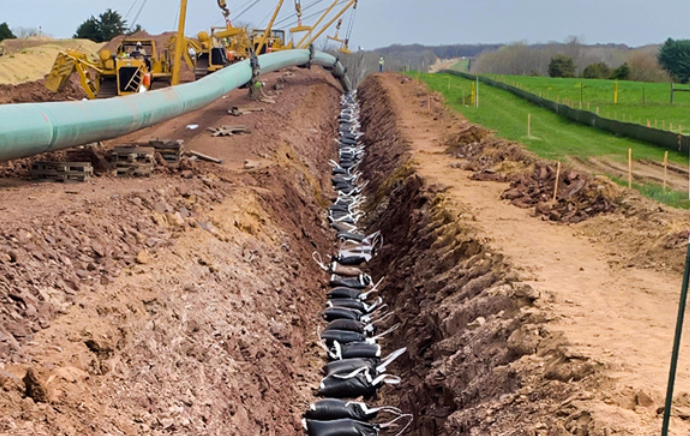
Introduction to geotextile pipeline weights
Geotextile pipeline weights refer to the specification of geotextile fabrics used in wrapping or protecting pipelines in civil engineering and construction projects. These weights are crucial in ensuring the fabric provides sufficient filtration, durability, and puncture resistance during installation and throughout the pipeline’s operational life.
Proper selection of geotextile pipeline weight helps maintain water flow, prevent soil intrusion, and enhance the structural integrity of drainage and sewer pipelines.
What Is Geotextile Pipeline?
A geotextile pipeline is a perforated or slotted pipe wrapped with geotextile fabric. The geotextile acts as a filter to allow water or fluids to enter the pipe while preventing soil, silt, and sediment from clogging the system.
Functions include:
- Soil filtration and separation
- Maintaining drainage efficiency
- Erosion prevention around the pipeline
- Protection of pipeline integrity
Understanding Geotextile Pipeline Weights
Geotextile weight is usually expressed in grams per square meter (gsm) or ounces per square yard (oz/yd²). The weight influences the fabric’s strength, puncture resistance, and filtration capability.
See also: Streamlining Payroll Operations for Businesses in Hong Kong
Light-Weight Geotextile (100–200 gsm)
- Suitable for small-scale or low-stress applications
- Easy to handle and install
- Ideal for garden, landscaping, or minor drainage pipelines
Medium-Weight Geotextile (200–400 gsm)
- Commonly used in road construction, agriculture, and standard drainage systems
- Offers a balance of puncture resistance and filtration efficiency
Heavy-Weight Geotextile (400–600+ gsm)
- Designed for high-stress applications, industrial sites, and erosion-prone areas
- High durability and puncture resistance
- Suitable for coarse soils and long-term installations
Factors Influencing Geotextile Pipeline Weight Selection
Soil Type
- Fine-grained soils require lighter fabrics with high permeability
- Coarse soils and gravel require heavier fabrics to resist punctures
Hydraulic Flow
- High flow rates may need fabrics with stronger structure
- Low flow rates allow the use of lighter-weight fabrics
Pipe Diameter and Installation Depth
- Larger diameter pipelines or deeper installations require heavier geotextile to withstand soil pressure
Environmental Conditions
- Exposure to UV, chemicals, or abrasive soil may necessitate heavier geotextiles
Applications of Geotextile Pipelines
Road and Highway Drainage
- Maintains proper drainage under roadbeds
- Prevents clogging and soil migration into drainage pipes
Agricultural and Landscape Drainage
- Removes excess water from fields and gardens
- Maintains soil stability while protecting pipelines
Erosion Control
- Stabilizes slopes and embankments
- Reduces sedimentation in streams and drainage channels
Landfills and Environmental Projects
- Facilitates leachate collection
- Protects pipelines in harsh soil conditions
Advantages of Using Geotextile Pipeline
- Prevents pipe clogging
- Provides structural support and durability
- Enhances filtration and water flow efficiency
- Reduces maintenance and replacement costs
- Resistant to installation damage
Installation Considerations
- Prepare trench and remove sharp objects from subgrade
- Wrap the pipe fully and overlap seams
- Backfill carefully to avoid puncturing the geotextile
- Avoid dragging fabric across rough surfaces
Conclusion
Selecting the proper geotextile weight vs puncture resistance is essential for ensuring long-term performance and durability of drainage and sewer pipelines. By considering soil type, hydraulic flow, pipe size, and environmental conditions, engineers can choose a geotextile that balances filtration efficiency, puncture resistance, and ease of installation. Proper selection and installation maximize the efficiency and lifespan of pipeline systems.
Frequently Asked Questions
What is geotextile pipeline used for?
It is used for filtration, soil separation, drainage, erosion control, and protecting pipelines from clogging.
How do I choose the right geotextile weight?
Consider soil type, hydraulic conditions, pipe diameter, installation depth, and environmental exposure.
Can geotextiles prevent pipeline clogging?
Yes, they filter out soil and sediment while allowing water to flow freely.
How long do geotextile pipelines last?
With proper installation and protection, they can last several decades.
Are geotextile pipelines environmentally friendly?
Yes, they help manage water, reduce soil erosion, and prevent contamination in drainage systems.