The debate between backrest and backless salon stools is a common one in salon circles. Both have their advocates, and the right choice depends on the specific nature of the work being done and the individual stylist’s physical needs. This article examines the evidence for and against backrests in professional salon seating.
The Case for Backrest Stools
Lower Back Support During Long Services
For services that allow the stylist to sit in a relatively upright position — such as detailed hair colouring, blow-drying, or scalp massages — a backrest provides meaningful lumbar support that reduces muscle fatigue over time. Stylists who perform longer, more stationary services often report that backrest stools significantly reduce end-of-shift back pain.
Backrest stools are also preferred by stylists returning to work after back injuries or dealing with chronic lower back conditions. The added support allows them to continue working comfortably without aggravating existing issues.
- Lumbar support reduces muscle fatigue
- Preferred by stylists with back conditions
- Beneficial for stationary, detailed services
- Encourages upright sitting position
The Case for Backless Stools
Freedom of Movement in Dynamic Work
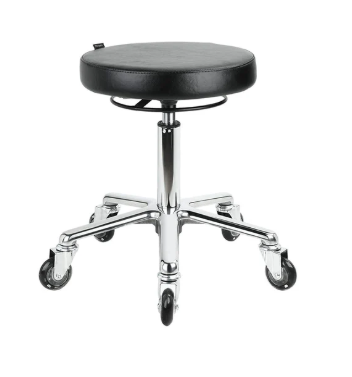
Backless stools provide complete freedom of movement in all directions, which many stylists prefer for services that require frequent repositioning — moving around the client’s head, bending at different angles, or accessing areas behind and beside the client. A backrest can physically block access in some situations, forcing stylists into awkward positions to compensate. For professional-quality results, investing in salon stools designed for commercial use makes all the difference.
Saddle Stools as a Middle Ground
Saddle stools offer a middle-ground solution: they provide postural support by encouraging an upright spine through hip tilt, without the physical obstruction of a backrest. Many ergonomics professionals recommend saddle stools for salon work because they deliver ergonomic benefit without limiting movement range.
Making the Decision for Your Team
The best approach is often to provide both options and let individual stylists choose based on their personal preference and the services they most frequently perform. Having a mix of backrest and backless stools in your salon gives your team the flexibility to optimize their seating for different tasks throughout the day.
Frequently Asked Questions
Can backrest stools restrict movement during haircuts?
They can in some situations, particularly when the stylist needs to move directly behind the client. Stools with low or curved backrests minimize this restriction compared to high-back designs.
See also: Finding the Ideal Sleep Solution for Every Home
Are saddle stools comfortable for all body types?
Saddle stools work well for most body types, but individuals with hip or knee conditions should try before buying, as the saddle position is not comfortable for everyone.
What is the best height for a salon stool during a haircut?
The ideal height positions the stylist’s eyes at approximately the client’s crown level when the client is seated in the styling chair, allowing comfortable access to all areas of the head.
Conclusion
The backrest vs. backless decision is ultimately personal and task-dependent. Equip your salon with options, educate your team about ergonomic sitting, and prioritize quality construction regardless of style. A well-supported stylist is a more comfortable, productive, and long-tenured member of your team.